
Breeding decisions sit quietly in the background of most dairy businesses, but their impact is anything but trivial. Over time, genetics shape how efficiently cows convert feed into milk, how long they stay in the herd, how robust they are and, increasingly, greenhouse gas (GHG) emissions they produce per litre of milk.
As part of the UK Dairy Carbon Network project, ten dairy farms in Northern Ireland identified breeding as one of their main strategies for reducing emissions. Each worked through a detailed breeding plan built around a bespoke template created by AHDB’s genetics team, with one-to-one support to tailor it to their system, herd data and ambitions.
What farms are aiming for
The clearest message across the farms is a move away from single-trait thinking. Profitability indices, particularly £PLI, anchor most breeding goals, but almost every plan stresses the importance of balanced genetic gain. Farmers repeatedly flagged the risk of chasing extremes, such as more milk and bigger cows, at the expense of fertility, efficiency or longevity.
Many herds are deliberately targeting higher fat and protein kilograms, with milk volume moderated to suit the system. Solids and efficiency often matter more than raw liquid litres. Where milk increases are part of the goal, they tend to come with guardrails: protect fertility, avoid maintenance creep and keep cows functional.
HealthyCow index, somatic cell count (SCC) and mastitis resistance, fertility and lifespan appear repeatedly as explicit targets, with some farms setting goals for youngstock to “lock in” future resilience. Environmental efficiency is also rising in prominence, with more farms now referencing EnviroCow and its component traits as a way to increase feed efficiency and reduce emissions.
Heavy use of sexed semen, increasingly guided by genomic testing, reflects a desire to concentrate replacements from the best females and be more selective about what enters the next generation.
What the genetics say today
Looking at where these herds are starting from shows £PLI varies widely, from mid-pack to top performers, but even high-ranking herds are using the plans to shore up weaker traits, add in feed efficiency and GHG considerations rather than standing still.
Components are a strength in many herds, though some need more kilograms of solids rather than higher percentages. Fertility stands out as a recurring relative weakness, even where other health traits are strong. In contrast, SCC and mastitis resistance are generally good to very good, with only isolated concerns linked to bought-in animals.
Maintenance and cow size are frequently flagged as a watchpoint. Several herds already have larger cows, while others are keen to prevent size drift as milk increases. EnviroCow scores tend to sit mid-tier, with most farms aiming to move up the rankings through a combination of better genetics for solids, fertility, lifespan and efficiency.
Encouragingly, youngstock data often show clear genetic progress compared with the milking herd, confirming that recent sire choices are moving things in the right direction. Where that uplift is not evident, farms are planning tighter bull selection and greater use of genomics on their females.
NI Farm Network genetic overview
| Theme | Current Position | Direction of Travel |
|---|---|---|
| Profitability (PLI) | Wide range – mid-pack to top performers | Maintain strong PLI while correcting weaker traits |
| Breeding Philosophy | Moving away from single-trait focus | Prioritise balanced genetic gain |
| Milk and Components | Strong fat and protein % in many herds; some need more kg | Increase fat and protein kg while protecting % |
| Maintenance (Cow Size) | Drift risk in several herds | Cap at ≤0 or ≤-2 |
| EnviroCow | Mostly mid-tier rankings | Move up 1–2 performance tiers |
| Genomics | Increasing uptake | Test all heifers; rank females for breeding |
Actions planned over the next 12 months
Many farmers are making fertility and health non-negotiable by setting minimum thresholds for HealthyCow index and fertility, and using lifespan to choose between high-PLI sires. Farms are putting firm limits on maintenance (typically zero or below) to avoid cows creeping up in size, while also keeping an eye on feed efficiency.
EnviroCow is moving from a background metric to a front-and-centre target, particularly for youngstock. On the replacement side, sexed semen is becoming standard on the best females, supported by expanding female genomic testing. Lower-merit animals are increasingly redirected to beef, most commonly easy-calving Angus or Hereford.
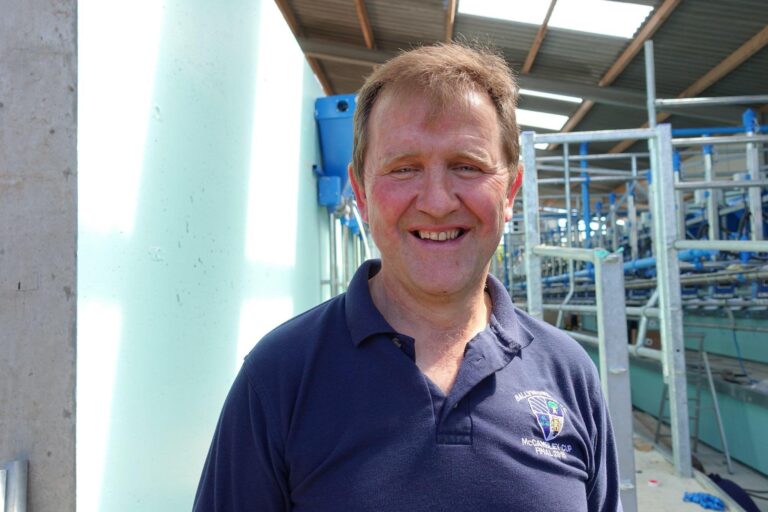
Wallace Gregg, who runs the family farm in mid-Antrim near Ballymena, said: “Having selected the breeding mitigation as part of the UK Dairy Carbon Network, the information received through genomic testing has helped me identify animals, well in advance of breeding, for selective matings in the future with regards to EnviroCow, as well as other desired traits. Also, I value the independence of the AHDB data so I can select the most suitable bulls from any AI company to suit my system.”
Several farms are also formalising inbreeding control, shifting from ad-hoc pedigree checks to structured use of AHDB’s Inbreeding Checker or mating programmes, often with recessive scanning included.
Governance matters too. Clear cut-offs for bull teams, regular reviews against AHDB’s Herd Genetic Reports, and better data hygiene are all part of turning breeding intent into consistent action.
A shared playbook, tailored to each farm
Taken together, these plans show breeding being used as a long-term, cumulative strategy – one that supports profitability first, while steadily improving efficiency and lowering emissions intensity. The detail differs farm to farm, but the direction is consistent: balanced cows, bred with clear rules, using better independent data and judged not just on what they produce today, but on how efficiently and sustainably they do it over a lifetime.