Stay up to date

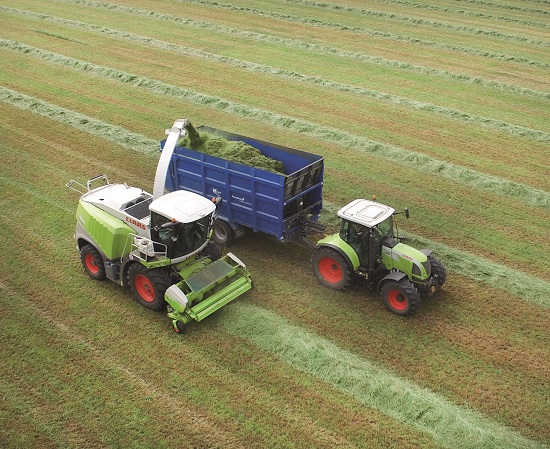
Combine cutting silage with tractor and trailer collecting

Rethinking cutting dates and silage quality

Rethinking cutting dates and silage quality has helped Edward Lister at Sibbersfield Lane Farm cut concentrate use from 0.4kg to 0.3kg per litre of milk. This shift has improved forage quality and feed efficiency, reducing costs and carbon footprint.

4 people walking away from the camera in a cow shed

Could ‘stacking’ be the key to reducing dairy farm emissions?

Farmers taking part in the UK Dairy Carbon Network (UK-DCN) are continuing to adopt new practices to improve efficiency, productivity and environmental performance on dairy farms.

Soil in blue bucket with sampling equipment

Targeted nutrient management improves efficiency and cuts fertiliser use

A farm nutrient review has identified opportunities for Grasslands Farming Ltd to reduce bought-in fertiliser and greenhouse gas (GHG) emissions, while improving grassland productivity and efficiency.

Dr Kate Le Cocq talking outside at an open farm event

Simple checks to improve forage quality and feed efficiency

Good silage clamp management is essential for reducing nutrient losses, preserving forage quality, and improving feed efficiency. All in all, this can help lower the carbon footprint of milk production by making better use of home-grown forage.

Dairy Impact Competition image with woman holding pint of milk and pointing up

Dairy Impact Competition

As part of the UK Dairy Carbon Network (UK-DCN), we’re launching a new competition that challenges you to rethink how dairy is seen and understood.

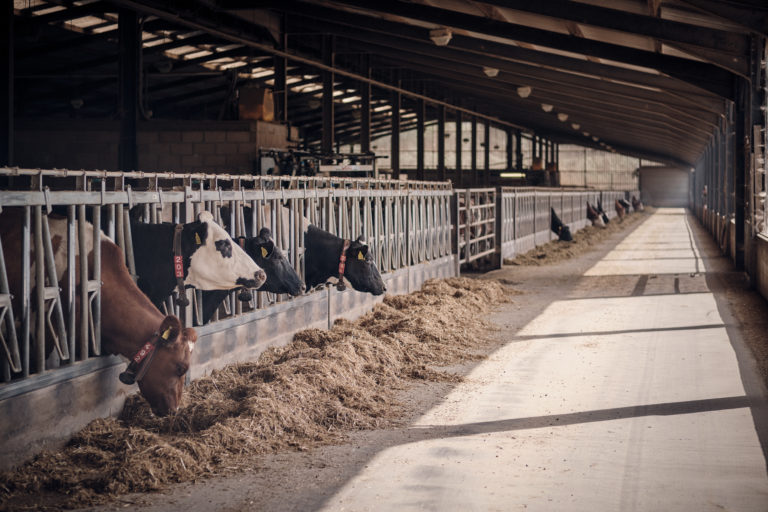
Image of cows eating ration indoors

Can nitrate help cut methane on dairy farms?

With a growing focus on practical ways to reduce greenhouse gas emissions, methane suppressing feed products (MSFPs) are gaining attention within dairy systems. One option is calcium ammonium nitrate (CAN), also referred to as nitrate. CAN is a dietary source of non-protein nitrogen and calcium, which has shown potential to reduce enteric methane emissions when incorporated into cattle rations.

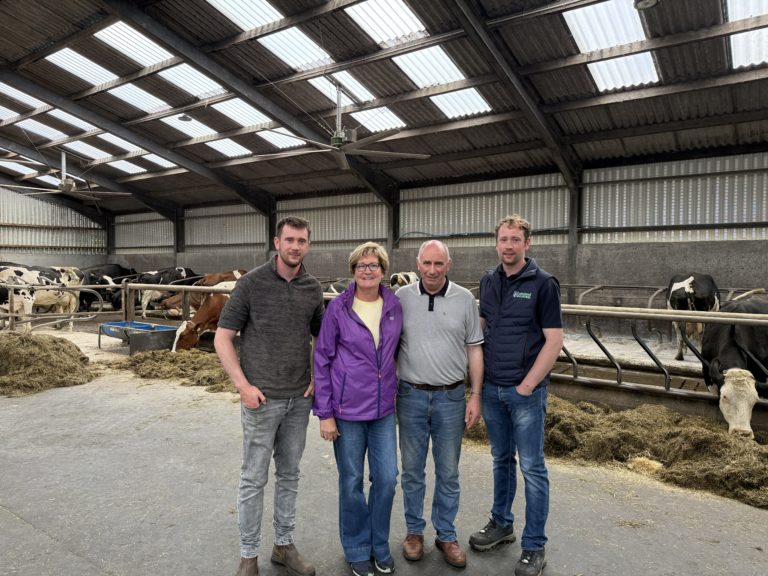
Five attendees stood in a cattle shed at the NI Open Meeting

UK Dairy Carbon Network hosts first Northern Ireland farm walk

The UK Dairy Carbon Network (UK-DCN) delivered its first on-farm event in Northern Ireland, highlighting practical, farm-level approaches to reducing greenhouse gas (GHG) emissions while maintaining productivity and profitability.

Emma Furnival stood in front of feeding cows in shed

Smarter nutrient planning cuts costs and emissions

By targeting slurry more precisely, correcting nutrient imbalances and improving nitrogen efficiency, a Shropshire dairy farm is set to cut fertiliser use from 240–250kg N/ha to approximately 170kg N/ha, while boosting grass growth and lowering greenhouse gas (GHG) emissions per litre of milk.

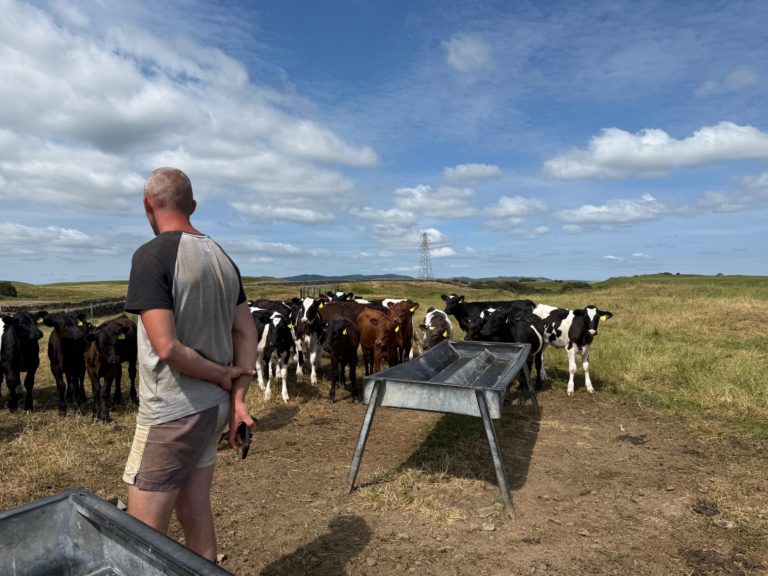
Will Nixon stood in a field in front of a herd of cows

Reducing mastitis to improve efficiency and lower emissions

By reducing clinical mastitis by 26% during peak winter risk periods, Nixon’s Farms Ltd has improved udder health, reduced milk losses and increased efficiency. This demonstrates how better disease control can directly lower greenhouse gas (GHG) emissions per litre of milk.

Jamie Robertson stood in cattle shed with cows in background

Optimising calf environments for health, performance and efficiency

Getting the calf environment right is one of the most immediate and cost-effective ways to both improve performance and lower emissions on UK dairy farms. At a UK Dairy Carbon Network (UK-DCN) event on 11 March 2026 at Two Pools Farm, South Gloucestershire, livestock housing consultant Jamie Robertson outlined how to assess and improve calf environments for better health, performance and efficiency.

Image of field being ploughed by a tractor

Reseeding for Greenhouse Gas Reduction: Why Better Grass Matters

In early March 2026, farmers in the Northern Ireland Farm Network of the UK Dairy Carbon Network (UK-DCN) attended a webinar focusing on the role of incorporating high sugar grasses into their grassland to reduce greenhouse gas emissions, while maximising productivity. Speakers at the webinar included Mary McEvoy and David Little from Germinal, with the webinar facilitated by John Morrow, Agriculture Manager at AgriSearch.

Image of feed pellets in trough

Essential oils in dairy rations

Essential oils are plant extracts that can enhance the palatability of dairy rations. These additives typically include compounds such as coriander seed oil, eugenol (from cloves), geranyl acetate and geraniol. By improving the sensory aspects of rations using these additives, feed intake, nutrient use efficiency and consequently cattle performance, can be improved.

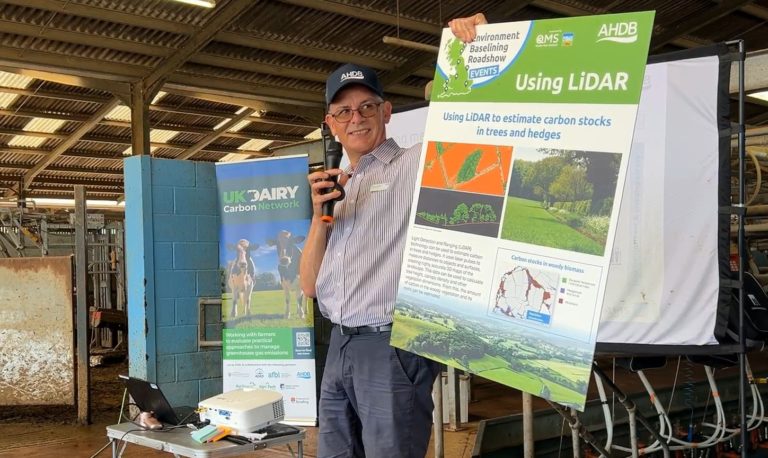
Speaker Ben Hartley stood in front of projector

Mason House Farm opens its gates to share emission reduction strategies

Lancashire’s Mason House Farm recently hosted farmers for a UK Dairy Carbon Network event, sharing how investment, innovation and collaboration are helping drive efficiency and support the farm’s plans for future expansion.

Speaker Paul Hargreave - in front of presentation screen

Soils: the foundation for productive dairy systems

Healthy soils underpin productive grassland and efficient nutrient use. During a UK Dairy Carbon Network workshop on 26 February 2026, farmers explored how soil structure, organic matter and simple field assessments can improve performance while reducing greenhouse gas emissions.

James Bretherton - speaker

Unlocking the value of slurry nutrients on dairy farms

Improving the understanding of slurry nutrient content can significantly improve fertiliser efficiency and reduce environmental losses. At a UK Dairy Carbon Network workshop on 26 February 2026, farmers explored how assessing, timing and application methods can help unlock more value from slurry.

Brades Farm cows in the parlour

Tackling lameness to boost efficiency and cut emissions

At Brades Farm, located in Farleton, Lancaster, the Towers family is taking a structured, evidence-based approach to reducing lameness as part of the UK Dairy Carbon Network.

Northern Ireland Network Meeting 1 - October

One year in: farmer-led emissions reduction in practice

One year into delivery, the project's Farm Networks are demonstrating what practical, commercially grounded emissions reduction looks like on real dairy farms. Over 50 farms have selected a combined total of 120 on-farm actions aimed at reducing greenhouse gas emissions.

Wallace Gregg

Balanced breeding for lower-emission herds

As part of the UK Dairy Carbon Network project, ten dairy farms in Northern Ireland identified breeding as one of their main strategies for reducing emissions. Each worked through a detailed breeding plan built around a bespoke template created by AHDB’s genetics team, with one-to-one support to tailor it to their system, herd data and ambitions.

Dairy cows at the feed barrier of a cubicle house.

What really drives the carbon footprint of milk?

New findings from the UK Dairy Carbon Network (UK-DCN) show that the carbon footprint of milk is shaped by many small, everyday management decisions rather than any single factor. The work also highlights feed efficiency as the strongest driver of lower emissions and shows why establishing a comprehensive baseline is an important first step.

Slurry spreading with dribble bar

The UK Dairy Carbon Network is holding its first open farm events

The UK Dairy Carbon Network (UK-DCN) is launching its first open meetings for dairy farmers, with a series of practical, on-farm events demonstrating ways to improve efficiency, profitability and reduce greenhouse gas emissions.

Elaine Williamson with FLO near Scarva Co Armagh

A forage-first approach to building efficiency

Grass has always done the heavy lifting on the Williamson farm near Scarva, Co Armagh. By putting milk from forage at the centre of their system, Ivan and Elaine Williamson, farming alongside their son Lewis, have built a herd capable of producing just over 9,000 litres from under 3.0 tonnes of concentrate per cow.

Newcastle University sniffers

Tracking dairy emissions with sniffers

Understanding and reducing greenhouse gas emissions begins with access to reliable, real-world data. This sits at the heart of Newcastle University’s contribution to the project, drawing on its development of a novel ‘sniffer’ sensor system to monitor methane emissions from dairy cows.

Tractor tilling a field

Northern Ireland farmers turn to forage to drive down GHGs

Farm Liaison Officers, Jonathan McAleese and Stephen Shanks, have been discussing ways to reduce greenhouse gas (GHG) emissions with their network of farms. Best Practice Forage and Grazing Management have emerged as popular choices.

Stuart Galloway, Grace Smith, Holly Nisbet, Sam Wilson

Steady progress towards greater efficiency

Improving efficiency and resilience while maintaining high milk quality is at the heart of Stuart Galloway’s approach at Barvernochan Farm in Wigtownshire. He is using the project to benchmark and build a more efficient system that produces high-quality milk while reducing emissions and maximising resource use.

Farm Liaison Officer, Sarah Taylor checking over a cow

Breeding resilience, one generation at a time

Farm Liaison Officer, Sarah Taylor, has been discussing options to reduce greenhouse gas emissions with dairy farms across South-West England and South Wales, with breeding emerging as one of the most popular early choices across her region.

Steven Morrison next to cows feeding

Driving dairy innovation together

UK Dairy Carbon Network project director Steven Morrison tells us about the project’s progress, innovation and efforts working together to reduce greenhouse gas emissions across UK dairy farms.

Fermentrics Carbon R60 Analyser

Innovative feed technology wins measurement technology challenge

Fermentrics (UK) Ltd has been named the winner of our 2025 Measurement Technology Competition for its innovative approach to measuring and reducing greenhouse gas (GHG) emissions on dairy farms. The company’s winning technology, Fermentrics Carbon, enables on-farm and in-lab measurement of methane emissions in total mixed ration (TMR) samples.

Cappagh Farms NI Gareth Shortt, Cormac Cunningham & John Morrow

A leading example of sustainable, grass-based dairy farming in Northern Ireland

Cappagh Farms is at the forefront of efforts to reduce GHGs while maintaining productivity and animal performance. The farm demonstrates how practical, data-driven management can deliver both environmental and economic benefits within a grass-based dairy system.

Dairy cows at the feed barrier of a cubicle house.

Optimising feed for healthier herds and lower GHGs

Farm Liaison Officer Jessica Graham has been actively engaging with her network of farms across Cumbria and southwest Scotland, discussing mitigation options with their advisors.

Stefan Yerby next to some calfs

Working together for a sustainable future for dairy

Defra commissioned the UK Dairy Carbon Network because it offers a unique opportunity to understand how dairy farming can contribute more effectively to the nation’s environmental ambitions.

UK Dairy Carbon Network map

UK Dairy Carbon Network appoints farms to lead emissions reduction efforts

Over 50 dairy farms from across the UK have been appointed to join the newly launched UK Dairy Carbon Network – a pioneering initiative that puts practical, science-backed greenhouse gas (GHG) reduction strategies into action on commercial farms.

Liam Sinclair Harper Adams

Measuring methane – bringing science to the shed

With around 40–50% of a dairy farm’s carbon footprint coming from methane, the UK Dairy Carbon Network is exploring ways to measure it as the project prepares to roll-out proven ways to reduce greenhouse gases emissions onto farm.

Rosie Chandler at Church Farm

Farm Feature: A fifth-generation dairy farmer driving sustainability

As part of the UK Dairy Carbon Network, we are profiling farmers who are taking part in the project. This month, we visit Staffordshire, where Rosie Chandler combines tradition, innovation and a clear-eyed focus on sustainability at her family’s mixed dairy and arable farm.

FLO team

Driving practical change on farm: introducing the farm liaison team

The UK Dairy Carbon Network project has taken a major step forward with the appointment of a new team of Farm Liaison Officers. Tasked with bridging the gap between cutting-edge research and practical on-farm application, they bring a wealth of experience in animal health, genetics, and farm management.

lying cows in a farm field

Helping UK dairy farms cut emissions and build a stronger future

The UK Dairy Carbon Network is an innovative, farmer-focused initiative that brings together over 50 UK dairy farms and supply chain partners to demonstrate practical approaches for reducing greenhouse gas emissions.

Silage cut in the field

Framework for cutting on-farm dairy emissions

The UK Dairy Carbon Network has successfully developed an initial framework for assessing and delivering practical, on-farm solutions to reducing greenhouse gas (GHG) emissions on dairy farms covering technologies, services and practices.

Farmer vet chat

Building a clearer picture of dairy emissions

Our field liaison officers have begun collecting on-farm data as part of our work to show practical ways to reduce greenhouse gas emissions on UK dairy farms. The aim is to build a partial carbon budget for each participating farm, focusing on the key areas that influence a farm’s carbon footprint.