
Good calf management delivers lifelong benefits. By giving calves the best start, farmers can improve lifetime performance, reduce losses and lower greenhouse gas (GHG) emissions per litre of milk.
Speaking at the joint AHDB and UK Dairy Carbon Network (UK-DCN) Raise ‘Em Right or Pay Twice’ event during GB Calf Week, calf health specialist Dr Hart from George Farm Vets encouraged farmers to see calf management as both an animal health priority and a long-term investment in herd efficiency.
“We know that good colostrum management is going to decrease our death rate, decrease disease occurrences, but more and more research is now showing that we’re also going to get increased yields, increased longevity and directly linking that to our sustainability aims,” she said.
Every replacement heifer requires feed, housing, labour and management before entering the milking herd. When calves die, become ill or fail to reach their potential, those resources deliver a lower return. Improving survival and lifetime productivity spreads those inputs across more litres of milk, benefiting both profitability and carbon efficiency.
Colostrum lays the foundation
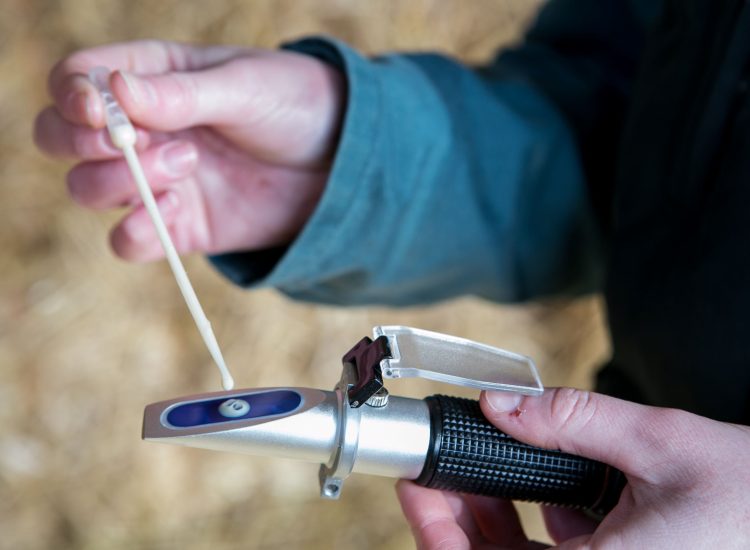
Effective colostrum management remains the cornerstone of successful calf rearing. Feeding good-quality colostrum as soon as possible after birth, providing an adequate volume and checking quality and passive transfer can help ensure calves receive sufficient antibodies to protect them while their own immune systems develop, reducing the risk of disease and mortality.
However, passive immunity begins to decline before a calf’s own immune system is fully established, creating a period of increased disease risk.
“The more antibodies you can get into that calf, the better,” said Dr Hart.
Transition milk extends protection
Dr Hart also highlighted the value of feeding transition milk during the first week of life. Produced after the initial colostrum feed, transition milk still contains valuable antibodies alongside bioactive compounds that support gut health and resilience. Transition milk can either be single sourced or pooled from several cows. However, pooling transition milk can increase the disease risk on-farm, so high standards of hygiene are essential, and milk should only be collected from low-risk cows.
Rather than replacing good colostrum management, it helps extend immune protection during one of the calf’s most vulnerable stages.
“The aim is to get these antibodies, as well as a load of other factors within this transition milk, into that calf for that first seven days,” she explained.
To better understand the wider disease risks for your farm, and how they can be managed, it is important to discuss this with your vet.
Early nutrition builds resilient calves
Nutrition during the first month of life has a major influence on growth because concentrate intake remains low. Dr Hart recommended feeding calves 6–8 litres of whole milk per day from the first few days of life to support development before common disease challenges, such as scour, emerge. There is also the option of incorporating milk replacement powders, for which Dr Hart emphasises the importance of choosing a replacement with high-quality ingredients which is fed using good hygiene practices and consistency, especially in those important early days.
“Getting that early nutrition in before the bugs and scours take the opportunity at day seven means we get this more resilient calf,” she said.
Strong early growth also helps heifers reach breeding weight sooner and calve at the target age, reducing the time they consume resources before joining the milking herd.
Prevent disease to improve efficiency
Diseases such as scour and pneumonia do more than increase treatment costs. They reduce growth rates, impair feed efficiency and can have lasting effects on lifetime productivity.
Preventing disease means more of the feed, housing and labour invested in each replacement heifer is converted into productive milk output, improving both economic and environmental performance.
Good housing supports healthy calves
Good housing and management are equally important for reducing disease pressure. Dr Hart recommended keeping calves in stable groups with no more than two weeks’ age difference – ideally around 10 days – and providing 2.5–3.0m² of space per calf.
Maintaining good hygiene, thoroughly cleaning and disinfecting pens between batches, and allowing housing to rest between groups can help minimise disease transmission by giving surfaces time to dry fully before new calves enter. Adequate ventilation is also important, providing good air movement without creating draughts at calf level and helping remove moisture, dust and airborne pathogens from the building..
Five calf management priorities for better efficiency
- Maximise passive immunity through effective colostrum management.
- Feed transition milk during the first week of life to extend immune protection.
- Support rapid early growth by providing adequate milk from the first few days.
- Reduce disease through good housing, hygiene and calf management.
- Increase lifetime productivity by helping more heifers reach the milking herd and remain productive for longer.
Sustainability starts at birth
There is no single solution to reducing GHG emissions on dairy farms, but giving calves the best possible start is one of the most effective. Good colostrum management, strong early nutrition, effective disease prevention and well-managed housing help more heifers reach first calving, achieve their genetic potential and remain productive for longer.
Many farms in the UK-DCN are already identifying opportunities to improve youngstock management as part of their wider plans to reduce emissions and improve efficiency. From strengthening colostrum protocols and refining calf nutrition to improving housing and disease prevention, these practical changes are helping more heifers reach their potential, increasing lifetime productivity and lowering the carbon footprint of milk production.