
Methane is one of the largest contributors to a dairy farm’s carbon footprint, and is therefore an important target for emissions reduction.
At a recent UK Dairy Carbon Network (UK-DCN) event with farmers from the GB Farm Networks, hosted by Farm Liaison Officer Sarah Reed, speakers from project partners SRUC and the University of Reading discussed methane-suppressing feed products (MSFPs) and measuring methane-reducing strategies.
Around 40% of a typical dairy farm’s carbon footprint comes from methane, primarily produced through enteric fermentation. “Fibrous feed is digested and fermented by different microbes in the rumen,” explained Dr Holly Nisbet, scientist and dairy researcher at the SRUC Dairy Research and Innovation Centre.
“But during this process hydrogen and carbon dioxide are also produced. These gases are utilised by specialised microorganisms known as methanogens, with methane produced as a result.”
Reduction strategies can target these methane-producing microbes directly or divert hydrogen through alternative pathways, using dietary or breeding strategies.
“Dietary changes range in efficacy but can be significant and more immediate in effect. Breeding tactics to alter methane production of the cow is more of a longer term approach, with the effects more significant for long-term change.”
Established nutritional strategies
Some Farm Network farms have chosen MSFPs as part of their nutritional strategies.
Sabrina Ormston, researcher at the University of Reading, outlined the eight currently available. Of these, four are currently being used on farm in the project: calcium nitrate, essential oils, tannins and dietary fats.
Calcium nitrate works by providing an alternative pathway for hydrogen, by converting hydrogen to ammonia in the rumen, and can reduce methane by around 10-15%, although results vary with diet composition.
“Because calcium nitrate is a source of nitrogen, it’s important to make sure the rest of the ration is appropriately balanced,” explained Sabrina. “If we have too much degradable protein in the ration, there’s a risk that this excess nitrogen can contribute to ammonia and nitrous oxide emissions.”
Essential oils are another option but have produced more variable results, with published studies reporting reductions of around 3-15%. Results depend on product, inclusion rate and the diet.
Fat supplements, she explained, generally deliver smaller direct reductions of around 1-6%. However, fats can also improve milk yield and feed efficiency, helping reduce methane per litre of milk produced.
For Farm Network farms introducing MSFPs as part of a nutritional strategy, the project has concentrated on established options with a robust evidence base.
“The feed options we are including have a strong scientific background, have been well studied and have approval to be used in Europe and the UK,” said Holly.
However, the aim is not simply to select the additive with the greatest potential reduction. Cost, ration composition, milk production, feed efficiency and how easily a strategy can be incorporated into an individual farm system all need to be considered.
Measuring methane on farm
Measurement is fundamental to an evidence-based farm strategy, demonstrating not only whether emissions are reduced without a detrimental impact on animal health and performance, but also whether productivity and efficiency are improved.
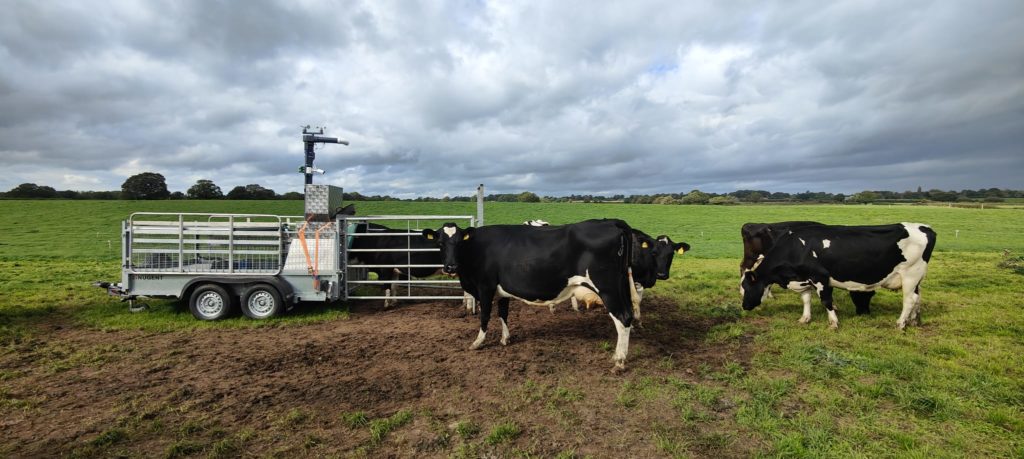
GreenFeed units have been used on participating farms, with measurements managed and analysed by project research partners, including the SRUC Dairy Research and Innovation Centre.
GreenFeed units can measure methane from both housed and grazing herds by using small amounts of feed to attract cows, while monitoring emissions from the cow and surrounding environment as they eat.
“The cows come to the unit’s feed trough, and their electronic identification (EID) tag is scanned, triggering a small feed reward,” explained Holly. “As the cow eats, a fan draws air through the unit and down to the sensors, which measure the methane.”
Around four minutes of data is needed for a useful measurement, with repeated measurements building a picture of individual methane production. GreenFeed units are currently considered the more accurate on-farm system for calculating daily methane output.
Holly shared how a GreenFeed pasture unit was used on a Farm Network organic farm to assess the impact of including 2kg of organic rapeseed expeller in the diet.
The results showed a 4.6% reduction in absolute methane production, equivalent to around 20g/cow/day, with no significant reduction in milk yield. However, fat- and protein-corrected milk fell slightly, meaning methane intensity – grams of methane per kilogram of fat- and protein-corrected milk – fell by just 1.2%, a difference that she said was not statistically significant. The drop in fat and protein could be addressed through further refinement to the diet formulation.
Developing sniffer technology
Moologgers offer a less invasive approach and are particularly suited to commercial systems where cows repeatedly visit the same point, like robotic milkers or concentrate feeders.
“Moologger is essentially a type of ‘sniffer’ device,” explained Sabrina. “It has been designed to be used in the commercial farm environment.”
“We can install them in automatic milking robots or on concentrate feeders, which are offering small amounts of concentrate feed. And it essentially allows us to measure on large numbers of animals, or every animal that comes through the robotic milker.”The system captures methane and carbon dioxide concentrations in a cow’s breath using infrared technology, while an animal presence sensor indicates when an animal enters the milking robot.
Repeated measurements from the same cows are required to develop prediction equations for daily methane output. The aim is for units to remain on farm for six to eight weeks, with data downloaded remotely.
Unlike a GreenFeed unit, Moologgers cannot yet directly provide an accurate grams-per-day figure. Researchers globally, including those at The University of Reading, are developing modelling to turn repeated sniffer measurements into estimates of daily methane production.
By combining established strategies with on-farm measurement, the UK-DCN can build a clearer picture of what works under real farm conditions. This, ultimately, helps farmers target interventions where they can deliver the greatest benefit to productivity and environmental performance.
Originally published in the November/ December 2026 edition of Cow Management magazine.