
Slurry-fed anaerobic digestion (AD) is attracting growing interest as dairy farmers look to cut emissions, generate renewable energy and make better use of on-farm resources. But could it be the right fit for your business?
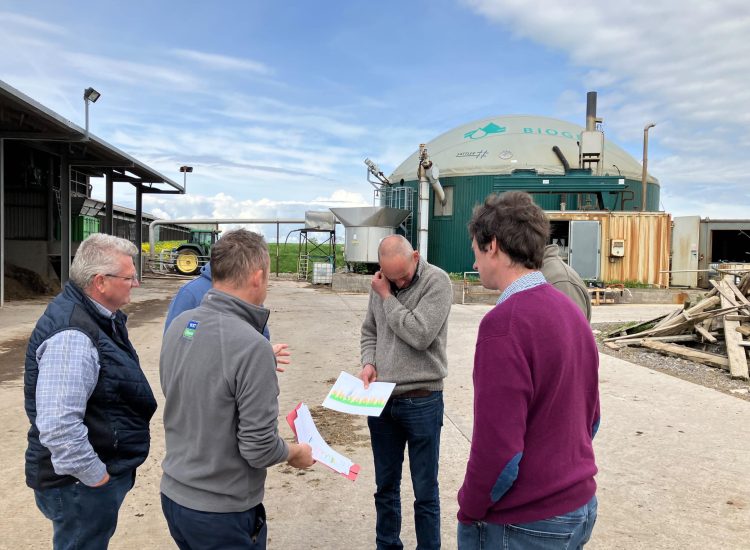
Farmers attending a recent UK Dairy Carbon Network (UK-DCN) event toured a farm-sited AD plant with William Tuer, AD consultant and director of WST Rural, exploring where the technology can, and cannot, fit within dairy businesses.
Solar photovoltaic (PV) and battery storage remain attractive options, but AD offers something other renewables cannot always provide: controllable, round-the-clock energy generation.
Unlike solar panels, an AD plant generates electricity day and night by using anaerobic biological processes to break down feedstocks – like slurry or crops. This produces biogas – mainly methane and carbon dioxide, with small amounts of hydrogen sulphide, water vapour and other trace gases – which can be converted into electricity and heat.
Consistency is key
However, William said that AD should not be viewed as a ‘fit and forget’ technology.
“If you’re putting an AD digester in, you should consider it an addition to your dairy herd,” he said. “Slurry-based AD systems are generally quite resilient once established. But when something does go wrong, it can go catastrophically wrong quite quickly.”
The digester depends on a stable bacterial population, making consistency critical. Changes to feedstock, temperature or pH will affect performance, with failures often linked to contamination, including waste milk, entering the digester.
“Milk is no good for the bacteria,” he said. “You only have to put a small amount in and three or four days later you’ll have problems.”
Return on investment
Where AD does fit, the benefits can be significant. A well-managed slurry-fed plant can provide a steady supply of electricity, reducing exposure to rising energy costs while giving the farm greater control over power supply.
Using a 280-cow herd, housed all year round, and a 40kW slurry-fed AD plant as an example, farmers heard how a system operating for around 8,000 hours annually could generate about 320,000kWh of electricity.
After accounting for the energy needed to run the plant itself, this could equate to electricity savings of around £40,000/year. AD can also make better use of slurry by capturing harmful emissions, while the resulting digestate provides a more readily available source of nitrogen for crops and grassland.
Where there is demand, recovered heat can provide additional value. However, William stressed that the business case must include both capital and ongoing costs. A 40kW plant could cost around £220,000 for the core installation, with slurry infrastructure and electrical works potentially adding £100,000 or more.
Annual maintenance is estimated to average around £12,000, although costs can vary significantly. On the example discussed, an indicative return on investment of seven to nine years was suggested, depending on individual farm circumstances.
“With these plants running for around 8,000 hours a year, something will go wrong,” said William. “Some years it might cost £3,000 to £4,000. Other years you may need to replace an engine, or deal with blockages or valve failures. Build the potential for larger costs into the budget.”
Management matters
Alongside installation costs, farmers were encouraged to consider digestate handling, insurance, site layout and future environmental regulation before committing to a project.
Digestate separates more readily than raw slurry and can become difficult to remix if stored without suitable separation equipment, making pumping more challenging.
Insurance was another key consideration. With AD plants combining biogas, electricity and hazardous environments, insurers increasingly view them as higher-risk assets. Farmers were advised to engage insurers early and carefully consider plant location.
William emphasised farmers must honestly assess whether they have the time, skills and resources to manage another complex biological system alongside the dairy enterprise. Long-term planning is also essential where farm systems and herd size may change.
“Slurry-fed AD plants require a constant feedstock, so they don’t necessarily work for grazing herds because of the lack of slurry during those periods,” he said.
“Beyond the digester itself, think about how the system would fit with electricity demand, export capacity, heat use, potential battery storage and future environmental requirements.”
AD system requires careful modelling, but Willam says the potential rewards should not be overlooked. “If the fit is right, it’s potentially isolating the farm business from fluctuations in energy pricing,” he said. “It’s creating a stable, sustainable energy model on your farm.”
The event highlighted that while anaerobic digestion is not the right solution for every dairy business, understanding its opportunities, limitations and management requirements is essential as the industry works towards reducing emissions and improving resilience.
“One of the biggest benefits of these UK-DCN hosted events is giving farmers the opportunity to see technologies like anaerobic digestion operating on a commercial dairy farm and ask honest, practical questions,” said Jessica Graham, a Farm Liaison Officer for the UK-DCN.
“Whether they decide AD is right for their business or not, they leave with a much clearer understanding of the considerations involved and the confidence to make informed decisions that support both business resilience and emissions reduction.”