
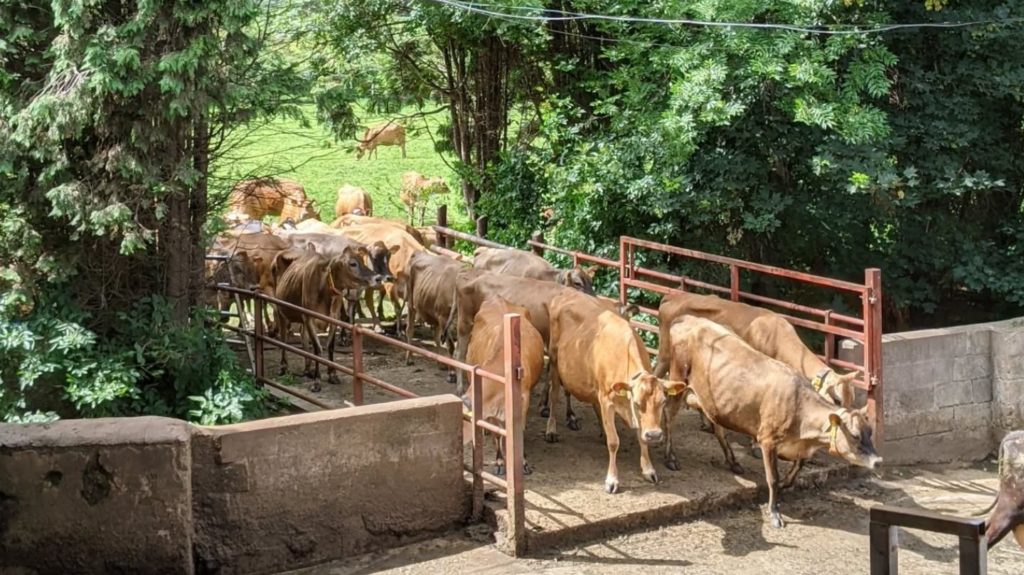
Six months after setting out to strengthen hoof health, the Towers family at Brades Farm has made significant progress, with herd lameness falling by 38%.
An independent mobility assessment of the milking herd in July 2026 found that the proportion of lame cows had fallen by 11.5 percentage points since January 2026. The number of severely lame cows also fell from 17 to 7, while the herd itself increased from 495 to 515 cows.
The latest result compares positively with the wider dairy sector. The GB Dairy Cow Lameness Manifesto estimates lameness prevalence across the British dairy herd at around 30%, placing Brades Farm well above average.
Tackling lameness was one of the areas chosen by the farm as part of its participation in the UK Dairy Carbon Network (UK-DCN). Led by AFBI and funded by Defra, the three-year project is supported by a UK-wide consortium of leading research and industry partners and works with over 50 UK dairy farms to implement and assess practical, farm-ready solutions for reducing greenhouse gas (GHG) emissions. The farm’s aim was to improve animal health and welfare while also identifying opportunities to improve farm efficiency and reduce GHG emissions.
The result reflects the farm’s proactive approach to cow comfort and hoof health, using regular independent measurement and veterinary advice to identify problems earlier and focus resources where they can have the greatest impact.
Brades Farm is a family-run dairy enterprise, with the Towers family farming approximately 600 acres (242 hectares) of grassland. The herd comprises roughly two-thirds Holstein Friesians and one-third Danish Jerseys, with the Jerseys introduced to naturally increase the average butterfat and protein levels needed for barista milk. The cows are milked twice a day, with the farm focused on producing high-quality milk while maintaining strong standards of animal health and welfare.
As part of the UK-DCN, the Towers family worked with Owen Atkinson, a vet at Dairy Veterinary Consultancy, to review the farm’s approach to lameness and identify practical opportunities to improve hoof health. Atkinson, who is accredited with the Register of Mobility Scorers (RoMS), also carried out the independent mobility assessments used to measure progress.
Owen said: “Brades Farm was already putting a lot of effort into routine trimming and treating lame cows. What the programme helped them do was step back and look more systematically at why cows were going lame in the first place. Once you identify the root causes, the solutions are often more practical than you might expect.”
Identifying problems earlier
The progress has come from a combination of practical changes to foot health management, identified through the Healthy Feet Programme and implemented by the farm team.
One of the most significant changes has been the installation of an automatic footbath after the milking parlour. This helps maintain the correct solution concentration as cows pass through at every milking and avoids diluting or slurry contamination that can reduces effectiveness. This has strengthened the management of digital dermatitis, which was identified as an important area for attention at the start of the programme. The farm has also reviewed its treatment protocols with veterinary input.
A key change has been how the farm uses mobility data. Owen said: “The shift to regular mobility scoring prior to the foot trimmer’s visits has probably been the single most impactful change. Isaac, the foot trimmer, now works from a targeted list of newly identified Score 2 [Impaired Mobility] cows rather than largely a routine schedule. Getting to cows early, before they deteriorate, is where you get the biggest return on your trimming resource.”
The farm has also continued to focus on cow comfort and foot health. This has included levelling the sand in the Jersey cubicles and using a smaller machine to spread it more effectively, helping to keep them well maintained and provide cows with a comfortable place to lie. Together, these measures support normal cow behaviour, encourage lying and help maintain overall cow comfort.
The approach has also included changes to the management of digital dermatitis, with the farm moving away from bandaging towards vet-led treatment protocols.
Owen said: “There’s no single magic solution here: the improvement at Brades has come from a combination of relatively simple changes: improved footbathing, earlier identification of lame cows and better use of time spent trimming. It did require some additional resource, but what’s striking is how much of the improvement came from using what was already there more effectively.”
Better cow health, with wider benefits
The primary benefit of the work has been improved cow health and welfare, with fewer cows experiencing mobility problems and fewer at risk of becoming severely lame.
The reduction in Score 3 (Severely Impaired Mobility) cows from 17 to 7 is particularly significant, as these cows are at greater risk of premature culling. The improvement has also brought the farm much closer to its target of reducing lameness prevalence to no more than 15% of the herd.
The work also has wider benefits for the dairy business. Healthier cows are more likely to remain productive, maintain milk yield and perform well reproductively. The AHDB Lameness Cost Calculator estimates that the reduction in lameness at Brades Farm has reduced the annual cost associated with the condition by around £60,000, however this figure represents a projected economic benefit based on reduced lameness incidence rather than a direct measurement of farm income.
There are also potential environmental benefits. Lameness can contribute to premature culling, increasing the number of replacement heifers a farm needs to rear. Keeping cows healthier for longer can therefore reduce the resources and GHG emissions associated with rearing replacements. Improved productivity and fertility can also help reduce the carbon footprint of each litre of milk produced.
Maintaining the progress
The next stage is about maintaining the changes that have delivered the biggest gains and continuing to identify problems early.
Regular mobility scoring, targeted trimming and effective footbathing will remain important parts of the farm’s approach. There are also opportunities to further improve cow flow and housing as the farm considers future infrastructure and herd capacity.
Brades Farm’s progress demonstrates the value of taking a whole-farm approach to emissions reduction. By identifying animal health as an area for action through the UK-DCN, the farm has been able to make practical changes that deliver benefits well beyond emissions – improving cow health and welfare while also reducing costs and supporting the efficiency of milk production.