One year into delivery, the UK Dairy Carbon Network (UK-DCN) Farm Networks are demonstrating what practical, commercially grounded emissions reduction looks like on real dairy farms.
The project is built around collaboration. Farmers choose the interventions that suit their individual businesses, supported by technical teams, Farm Liaison Officers (FLOs), nutritionists, vets and academic partners. The result is an approach that blends science, practicality and commercial reality.
Across the four regional Farm Networks, over 50 dairy farms have selected a combined total of 120 on-farm actions aimed at reducing greenhouse gas emissions – clear evidence that active engagement is driving meaningful change on farms.
Confidence growing across themes
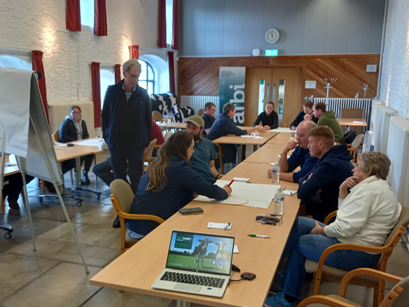
The introduction of the second phase of on-farm actions in autumn 2025 marked an important step forward. In-person meetings, delivered in partnership with Scotland’s Rural College (SRUC), Harper Adams University, Agri-Food and Biosciences Institute (AFBI) and the University of Reading, brought farmers together to explore options in greater technical depth, particularly around feeding strategies.
Technical teams were able to clearly explain the science, cost implications and practical application of each option, which substantially increased farmer confidence. Uptake has been strongest across nutrition, breeding and nutrient management, with animal health also represented across the Farm Networks.
Aligning breeding with existing goals
For many participating farms, breeding improvements were a natural fit. Efficiency traits were already part of herd strategy, and incorporating genetic indices, such as EnviroCow, required refinement rather than wholesale change.
Farmers have particularly valued access to independent, unbiased discussion around genomic testing and breeding strategy. In some cases, this has meant revisiting bull selection decisions with fresh insight. In others, it has prompted broader conversations about crossbreeding and long-term herd direction.
Long term nutrition changes
Nutrition has generated significant interest with farmers keen to understand how dietary change can influence emissions, milk output and animal health. Many have chosen to begin with full ration reformulation, reflecting a preference to address the fundamentals first, such as reducing embedded carbon and adjusting fat and starch concentrations. Others have selected to include dietary ingredients that have been proven to reduce direct methane emissions. Financial sustainability and milk processor support remains central to decision-making.
Across the Farm Networks, direct methane measurements are being deployed where suitable, making emissions data more accessible and strengthening the link between management practices and measurable outcomes.
Nutrient management changes on-farm
Nutrient management has also seen strong engagement as many farms have moved from standard to protected urea, undertaken soil sampling or improved nutrient planning processes. Interest in legumes, which can fix nitrogen and reduce reliance on chemical fertiliser, is growing, with spring implementation planned across several farms.
In Northern Ireland, a review of slurry separation approaches has provided valuable insight into nutrient fractions and management opportunities.
For many farmers, these actions feel both practical and immediately relevant, linking emissions reduction directly with inputs and outputs as well as soil health.
Linking animal welfare and emissions
Animal health discussions have centred on metabolic disease, lameness, pneumonia prevention in youngstock and sustainable parasite control.
Although uptake has been more moderate than in other themes, the conversations have been meaningful. Farms focusing on youngstock health are exploring diagnostics and vaccination strategies, while others are refining mobility scoring or reviewing transition cow management.
Implementation has highlighted a familiar challenge: the gap between knowing best practice and having the time or labour to consistently deliver it. Nevertheless, farmers recognise the dual benefit that healthier animals are generally more productive, more efficient and better aligned with environmental goals.
From selection to implementation
Each choice is supported by a tailored action plan, developed collaboratively between the farm, FLO, technical team and the farm’s own advisers. This ensures that interventions are technically robust and suited to the individual business.
Across the Farm Networks, 95 of the selected actions are already being implemented. Progress varies by farm system and seasonal pressures, but overall momentum is strong.
The value of a collaborative approach
Collaboration sits at the heart of the project’s progress. Farmers, scientists and industry stakeholders are working together to co-design and apply solutions under real-world conditions.
The strength of relationships between technical teams and FLOs has been central to maintaining pace. Regular dialogue ensures challenges are addressed quickly and learning is shared across the Farm Networks. In turn, farmers benefit from coordinated, consistent support.
Looking ahead
At the one-year mark, activity is well underway. Farmers are asking deeper questions, testing new approaches and providing feedback that will shape the next phase of delivery. The experience so far demonstrates that practical approaches to lowering emissions can become part of everyday farm decision-making.