
Disease prevention is not just about treating sick calves. By reducing disease challenge in the calf environment, farmers can improve growth, future productivity, make better use of resources and lower greenhouse gas (GHG) emissions.
Speaking at a joint AHDB and UK Dairy Carbon Network (UK-DCN) ‘Raise ‘Em Right or Pay Twice’ event during GB Calf Week, calf health specialist Dr Kat Hart from George Farm Vets explained how practical management decisions in the calf shed can have a lasting impact on herd efficiency.
Every replacement heifer requires feed, bedding, housing, labour and veterinary care before entering the milking herd. Disease during this period can slow growth, delay first calving and reduce the return from those inputs, increasing emissions per litre of milk produced.
Reduce disease pressure in the calf environment
Disease is rarely caused by a single factor. Instead, it reflects the balance between a calf’s ability to resist infection and the level of disease challenge in its environment.
Dr Hart encouraged farmers to focus on reducing disease pressure through practical preventative management changes, rather than relying on treatment alone. Good nutrition, housing and environmental management all play a role in helping calves remain healthy and resilient.
Manage calf groups to reduce disease risk
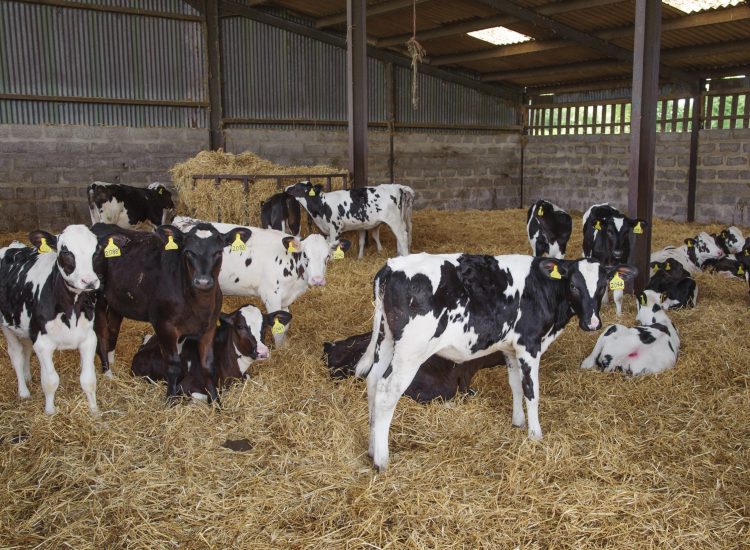
One of Dr Hart’s key recommendations was to group calves of similar ages, ideally with no more than around two weeks between the oldest and youngest animals.
Older calves can carry pathogens that younger animals are less able to cope with. Keeping age ranges tight reduces disease transmission while allowing feeding and management to be better matched to the needs of the group.
also influences disease risk. Overcrowded pens increase contact between calves, make bedding harder to keep clean and can reduce air quality, increasing the risk of diseases such as scour and pneumonia. Larger groups can also increase the opportunity for disease to spread, as more calves are exposed if an infection enters the group.
Providing around 2.5–3.0m² per calf helps create a healthier environment where nutrients can be used for growth rather than fighting infection.
Prevent scour by reducing disease challenge
Scour is one of the most common health challenges affecting young calves, with a range of potential causes including infectious agents such as Cryptosporidium.
Dr Hart highlighted the importance of reducing the risk of disease occurring by lowering infection pressure in the calf environment, rather than relying solely on treatment once calves become ill.
Good hygiene and effective cleaning protocols are central to reducing disease challenge. Managing calf housing carefully helps minimise the build-up and spread of pathogens, supporting healthier calves and reducing setbacks in growth.
Scour can have a lasting impact on performance by reducing growth rates and creating nutritional setbacks at a critical stage of development. Preventing disease helps ensure calves can use nutrients for growth rather than recovery.
Support respiratory health through good housing management
Pneumonia risk is closely linked to calf housing and management. Dr Hart highlighted the importance of good ventilation and air quality in creating an environment where calves can thrive.
Poor air quality, alongside other housing challenges, can increase disease risk and affect calf performance. Respiratory disease can have long-term consequences, reducing growth and affecting future productivity.
Improving calf shed management to reduce disease challenge is therefore an important part of preventing respiratory disease and reducing the need for treatment. Calf housing should allow fresh air to move through the building while removing moisture, dust and airborne pathogens, without creating draughts around the calves. The building’s design, including its openings, height and orientation, can all influence how effectively air moves through the shed.
Keep groups stable
Frequent regrouping and moving calves between areas of the shed can increase disease risk. As calves move between groups and environments, they may face new disease challenges while also experiencing additional stress which can lower their immune response.
Keeping calves in stable groups helps reduce these risks while making feeding and health management more consistent. This supports steady growth and helps calves develop into healthier replacements.
Healthy calves make better use of resources
Scour, pneumonia and other diseases do more than increase treatment costs. They reduce feed efficiency and slow growth by diverting nutrients away from development and towards immune response.
Healthy calves are more likely to convert milk and feed into liveweight gain, reach breeding targets on time and enter the milking herd without unnecessary delays. This improves biological efficiency and reduces the environmental footprint associated with replacement rearing.
Preventing disease through good management, nutrition and housing is also key to reducing reliance on antibiotics. By creating healthier, more resilient calves that are better able to cope with disease challenges, farmers can reduce the need for intervention while improving animal performance and supporting responsible antibiotic stewardship.
Further resources on calf management and the rearing environment can be found through AFBI’s Optihouse project:
Calf Rearing Event – OptiHouse | Agri-Food and Biosciences Institute
Practical changes with lasting benefits
Across the UK-DCN Farm Networks, many farmers are reviewing calf housing and youngstock management as part of their plans to improve efficiency and reduce emissions.
Simple changes such as improving hygiene, maintaining stable groups, providing adequate space and reducing disease pressure can help calves grow more consistently, improve replacement performance and contribute to lower GHG emissions across the whole dairy system.