
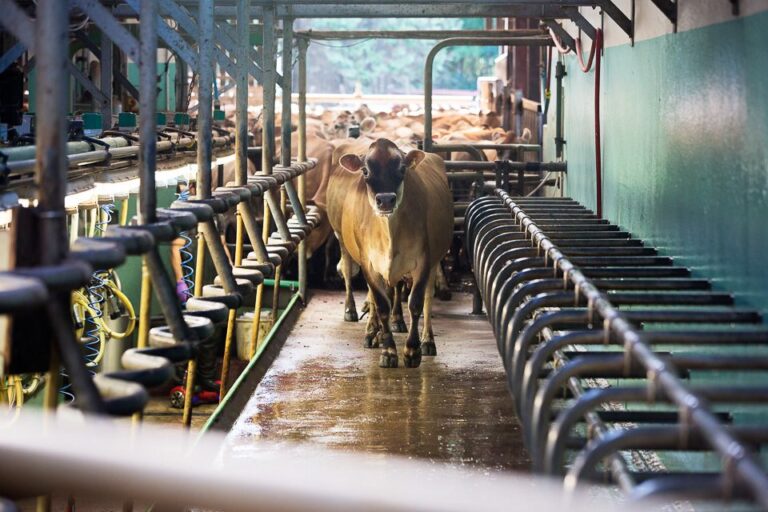
At Brades Farm, located in Farleton, Lancaster, the Towers family is taking a structured, evidence-based approach to reducing lameness as part of the UK Dairy Carbon Network (UK-DCN).
With a milking herd of 495 cows comprising Holsteins, Jerseys and Holstein-Jersey crosses, the farm has been reviewing mobility data and working closely with advisers to identify opportunities to strengthen hoof health and overall herd performance. While current lameness levels are broadly in line with national averages, the team recognises clear potential for further improvement, with associated gains in productivity and efficiency across the business.
Brades Farm already has many strong foundations for good hoof health. Sand-bedded cubicles across all sheds provide excellent cow comfort and support good lying behaviour. Yard surfaces and concrete passages are generally well maintained, and the farm team has a strong culture of early detection and prompt treatment of lameness.
Regular visits from a professional foot trimmer are complemented by daily in-house trimming and first-aid treatments, ensuring cows receive timely care when needed. Milking performance is efficient and a recent investment in an automatic footbath system has further strengthened the farm’s approach to controlling digital dermatitis, the most common lesion seen in the herd.
Working with vet Owen Atkinson and UK-DCN Farm Liaison Officer Jessica Graham, the Towers family has identified several areas where targeted improvements could further support hoof health and cow performance.
The farm will review stocking balance and cubicle usage across groups to optimise lying times, with particular focus on fresh cows and heifers. In the Jersey shed, attention will be directed toward improving cubicle maintenance and ensuring effective cow flow, enabling cows to move freely throughout the shed and make full use of the available space.
Infrastructure improvements, such as repairing small areas of worn concrete and refining slurry management around the parlour exit, will help keep feet cleaner and reduce infection pressure. In parallel, the team is assessing cow movement through key areas of the yard to encourage smoother flow and minimise standing times.
Footbath provision will also be extended to heifers and dry cows so that youngstock enter the milking herd with strong hoof health foundations already in place, further strengthening digital dermatitis control across the whole herd.
The team plans to make greater use of mobility scoring data to identify newly lame cows earlier and prioritise them for timely treatment. This targeted approach supports long-term improvements in hoof health across the herd.
The benefits of reducing lameness extend beyond welfare and productivity. Lame cows typically produce less milk, have poorer fertility and have a higher risk of early removal from the herd. By reducing lameness levels, farms can improve lifetime efficiency and reduce replacement rates. Healthier, more productive cows produce more milk over their lifetime, lowering emissions per litre of milk, providing a direct link between good hoof health and greenhouse gas reduction.
Brades Farm’s commitment to continuous improvement, combined with targeted investment and practical management changes, provides a strong platform for ongoing progress. A follow-up visit later in 2026 will review developments via a further whole-herd mobility score and provide additional training for the farm team, helping ensure improvements are measurable and sustained over time.